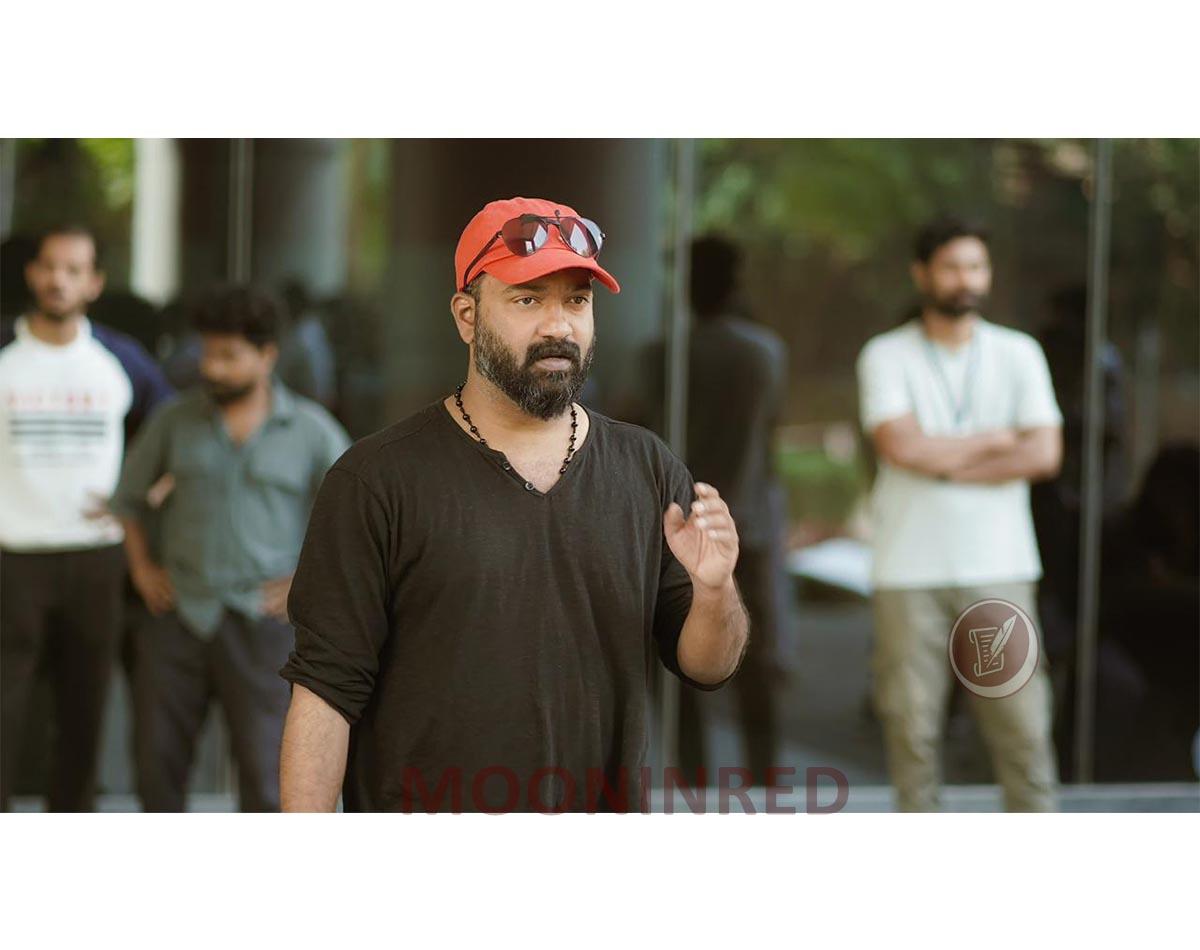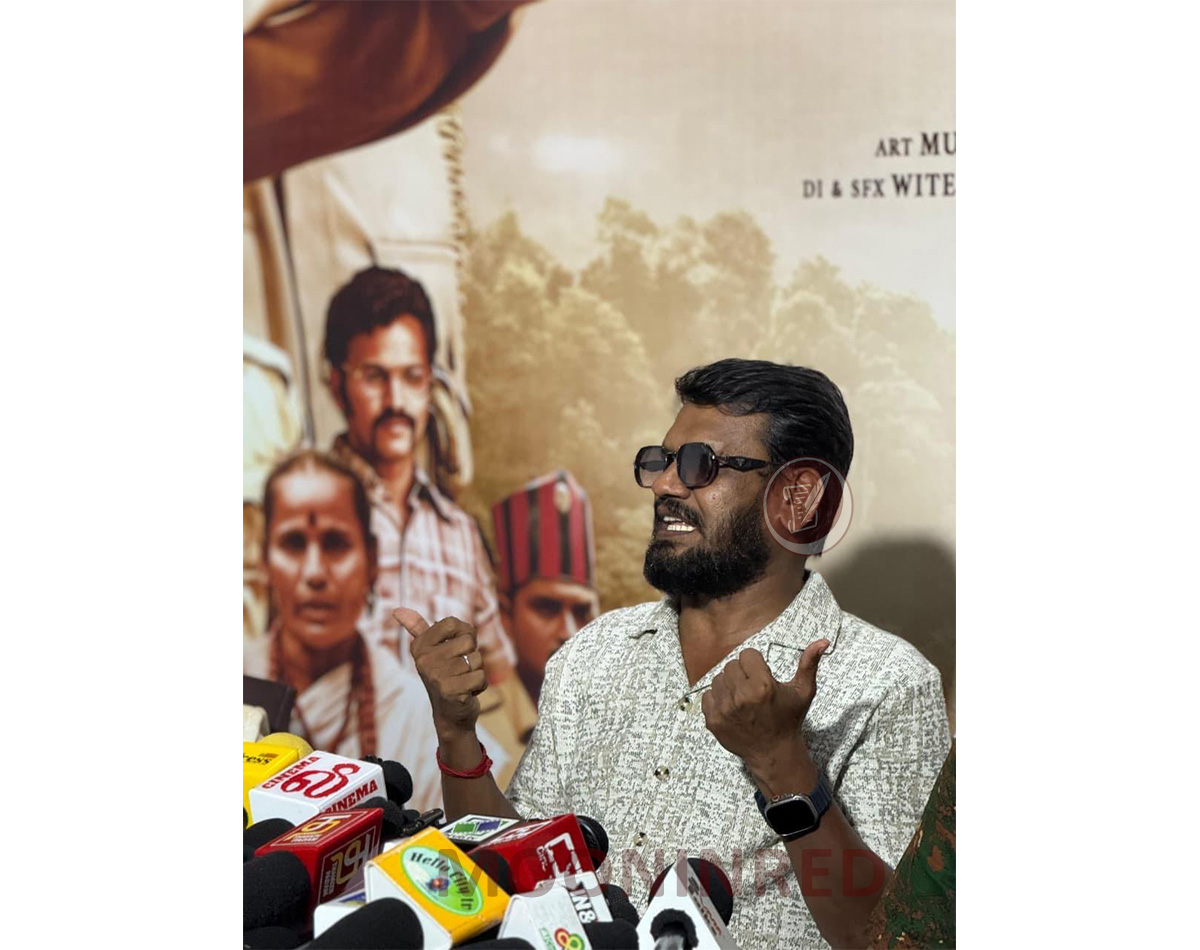

Dinjith Ayyathan: From Animated Frames to Living Cinema
Born in Thalassery, Kannur, Dinjith Ayyathan stands today as one of the most distinctive and visionary filmmakers in Malayalam cinema. His journey is not defined by shortcuts or overnight fame, but by years of quiet preparation, artistic discipline, and an unwavering commitment to visual storytelling. Cinema, for Dinjith, was never an accident it was a destination slowly reached through art, animation, and relentless belief.
Before cinema entered his life, art already had. Drawing was an intrinsic part of his childhood, encouraged by an environment where creativity was valued.His mother herself loved to draw. This natural inclination toward visuals led him to Chennai, where he pursued a Bachelor of Fine Arts in Visual Communication at a Fine Arts college. There, Dinjith didn’t merely learn theory; he learned how emotions, compositions, colours, and movements communicate stories without words. Alongside fine arts, he trained extensively in 3D animation, unknowingly laying the strongest foundation for his future as a filmmaker.
After graduation, Dinjith joined Reliance Entertainment in Pune as an animator. What followed was nearly a decade of intense professional growth. Over close to ten years, he worked across animation projects, eventually becoming an animation supervisor. This phase sharpened his technical precision, storytelling discipline, and understanding of collaborative creation. During this period, he also completed a six-month specialised course at a Pune institute, further expanding his creative range.
It was during this time that a subtle but powerful shift occurred. Armed with a simple handycam during his course, Dinjith began experimenting with live-action visuals. For the first time, direction felt attainable. The language of cinema ,beyond animation started making sense to him. Trusting this instinct, he made a courageous decision: he resigned from his well-established career. His parents stood firmly by his side, supporting his choice to step into the unknown and attempt something entirely new.
The next three years were marked by struggle and patience. Dinjith moved to Chennai, hoping to work as an assistant director and actively tried to enter Naalaiya Iyakkunar, a popular platform for aspiring filmmakers. However, the only film he had at the time was an animation work, which couldn’t be considered. Instead of being discouraged, he chose to pivot.
Understanding the need to survive while staying close to cinema, he joined another animation company. This wasn’t a step backward , it was strategic. Working as an animation director, he helped build a team and remained connected to storytelling. When the company expanded into VFX, several live-action filmmakers began collaborating with them. These interactions became a turning point. Through this ecosystem, Dinjith’s passion and skill caught the attention of director Abrid Shine. Recognizing Dinjith’s dedication and creative depth, Abrid Shine introduced him to a wider circle of filmmakers, which eventually led to actor Asif Ali.
Though Asif Ali liked one of Dinjith’s early stories, circumstances delayed its realization. Rather than waiting for a large-scale project, Dinjith chose conviction over comfort. He decided to make a film that mattered, regardless of scale. That choice gave birth to Kakshi: Amminippilla shot in 2018 and released in 2019. The film marked the end of a nine-year journey toward becoming a director. Subtle, humane, and grounded in emotional realism, it announced Dinjith as a filmmaker with a distinct voice.
A crucial collaborator during this phase was editor Sooraj E.S. Determined to find the right editor, Dinjith approached Sooraj during Kakshi: Amminippilla, believing that editing was not just technical assembly but storytelling itself. Their collaboration added restraint, rhythm, and depth to the narrative.
Another defining partnership was with Bahul Ramesh, who served as the cinematographer for Kakshi: Amminippilla. When the COVID-19 pandemic halted the industry, Dinjith was in Chennai while Bahul was in Kerala. Distance became a creative tool rather than a limitation. Through constant conversations, discussions, and exchanges, they began developing scripts. One such conversation changed everything. Bahul mentioned a story idea, and within ten days, he delivered a complete script. That script became Kishkindha Kaandam. Dinjith openly credits Bahul as an exceptional writer whose clarity and imagination shaped the film’s soul.
Released during Onam a season dominated by festive, big-budget films Kishkindha Kaandam defied expectations. Blending thriller, drama, and folklore, the film broke conventional genre boundaries and found remarkable audience reach. The way viewers embraced the film deeply moved Dinjith, reaffirming his faith in unconventional storytelling and audience intelligence.
Work on Eko had actually begun even before Kishkindha Kaandam, but the team chose patience, waiting for the right cast. After the success of Kishkindha Kaandam, actor Sandeep Pradeep came on board, and Eko moved forward. Its strong reception gave Dinjith the rare joy of back-to-back successes. He attributes the film’s uniqueness to rigorous writing drafting, revising, and refining every detail until the narrative felt precise and inevitable. Speaking about composer Mujeeb Majeed, he describes him as a wonderful person, reflecting the collaborative and respectful spirit he brings to every project.
Long before his live-action acclaim, Dinjith had already earned international recognition through animation. His animated short A Mail for Col. John Weits won a silver medal at Japan’s TBS DIGICON Film Festival in 2010 one of India’s rare achievements at the event showcasing his storytelling finesse even beyond conventional cinema.
Kishkindha Kaandam received widespread acclaim, earning the J.C. Daniel Award for Second Best Film, a nomination for Best Director at the 2025 SIIMA Awards (Malayalam), and a special honour at the Mazhavil Entertainment Awards 2025. The film’s success was further celebrated at the 55th Kerala State Film Awards, where it won Best Actor for Asif Ali and Best Editor for Sooraj.
Today, Dinjith continues to work on his upcoming scripts, carefully shaping his next chapter.
From animation desks to film sets, from solitary sketches to audience applause, Dinjith Ayyathan’s journey is a testament to patience, artistic courage, and faith in storytelling. He continues to redefine Malayalam cinema not by noise, but by vision.
Filmography:
Kakshi: Amminippilla
Kishkindha Kaandam
Eko