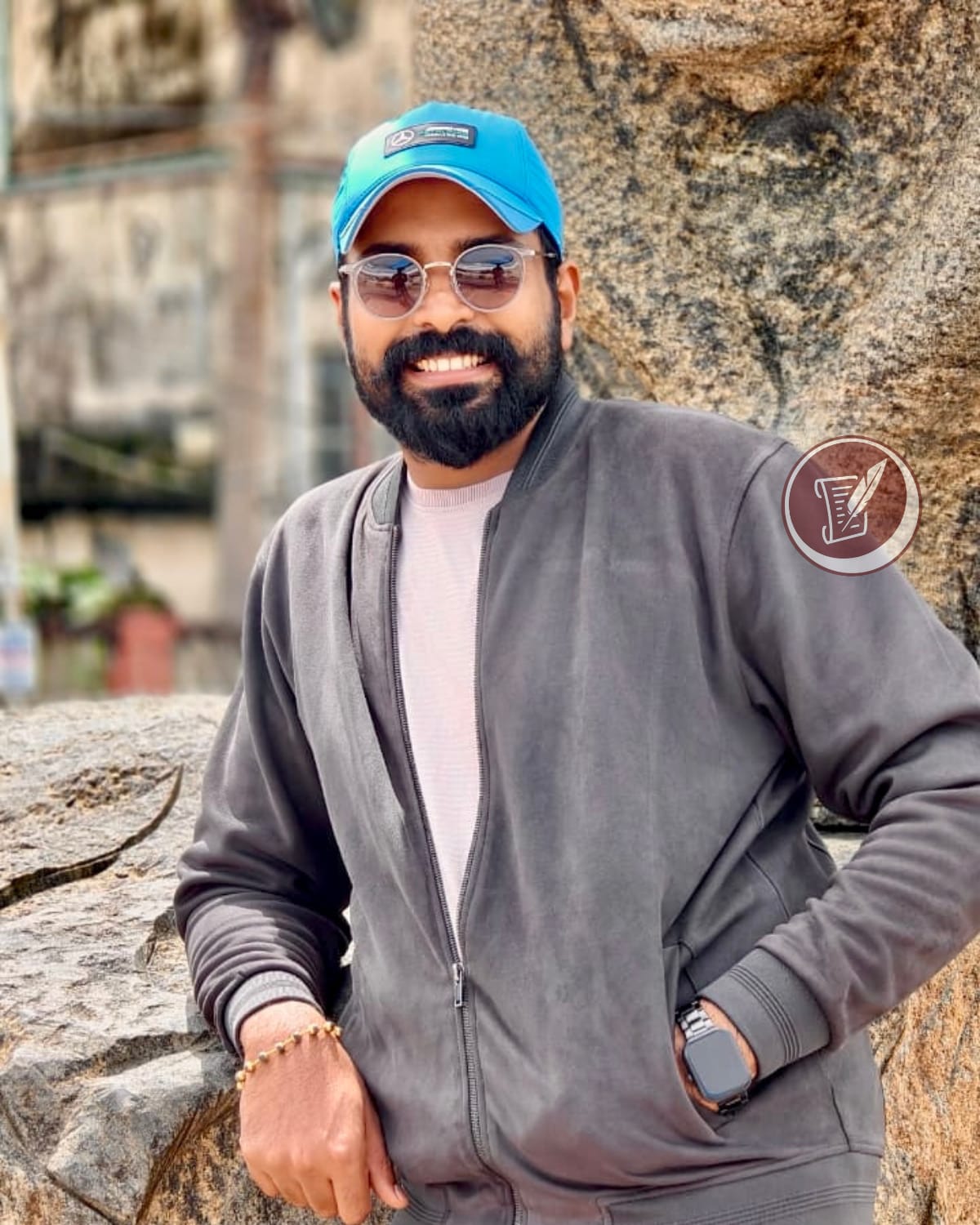
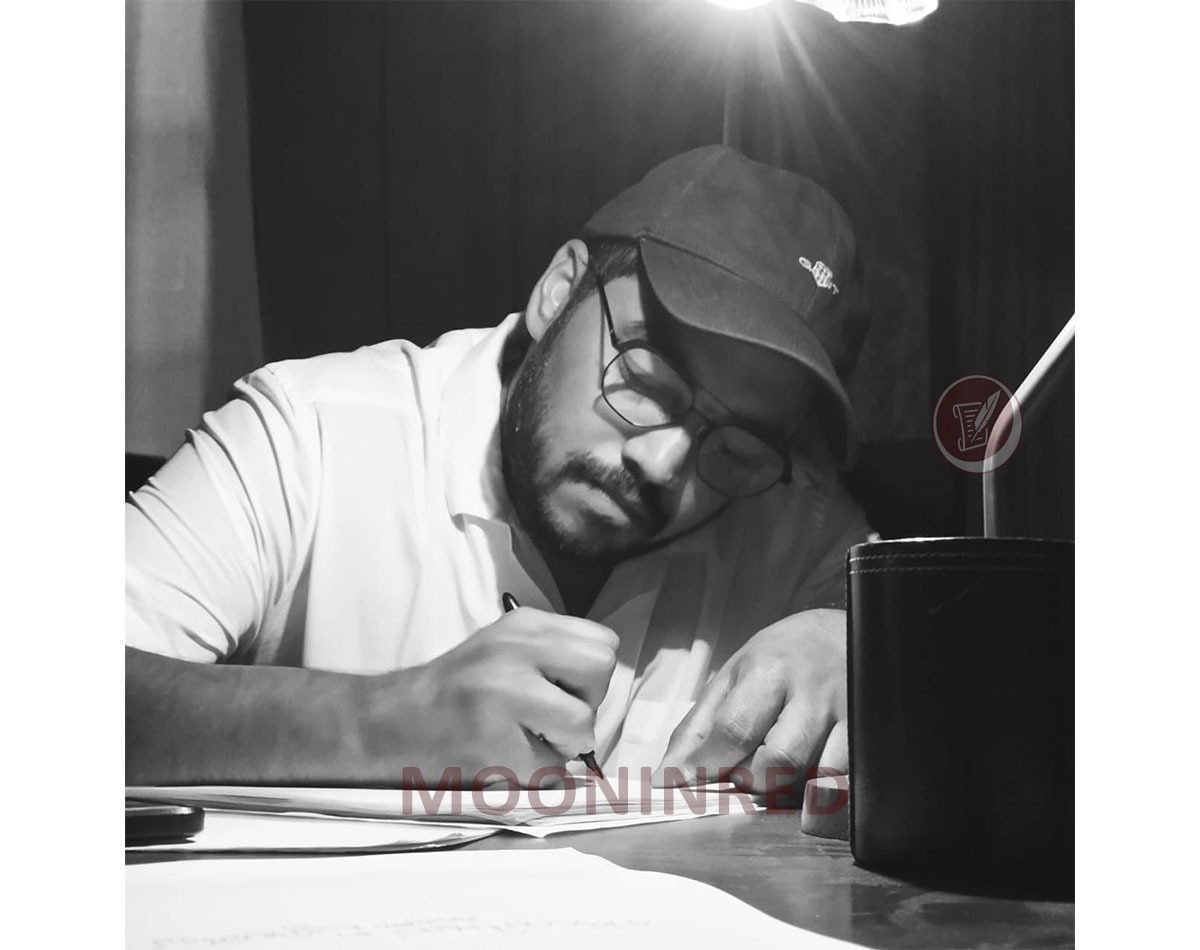
Ramu Sunil: Writing Cinema from Memory and Emotion
Born in Thrissur, Ramu Sunil’s relationship with cinema began long before his name appeared on film credits. Growing up in a household where his father’s job involved frequent transfers, theatres became a constant in his otherwise shifting geography. Even after school hours, he would find his way into cinema halls, absorbing films not just as entertainment but as experiences. It was around this time that Dolby sound was being introduced in theatres a technological shift that left a deep impression on him and quietly sharpened his fascination with the craft of filmmaking.
From childhood itself, Ramu developed an unusual attentiveness towards cinema. He knew when films were released, who was involved, and how films were made. This was not casual fandom; it was curiosity backed by observation. That instinct later guided him to formally study cinema, and he went on to complete his degree in Visual Communication in Coimbatore. College didn’t dilute his passion it refined it. Films were no longer just stories on screen; they were systems of sound, image, editing, and emotion working together.
His official entry into the film industry came through Tamil cinema, where he worked as an assistant director on Vaayai Moodi Pesavum. This project marked a turning point in his life. More than just a job, it was an immersion into the realities of filmmaking long schedules, collaborative pressure, and the discipline required to turn a script into living cinema. The opportunity itself came through a short film he had made earlier, proving that his creative work spoke louder than networking alone.
A crucial link in this journey was Abhinav Sunder, the editor of Vaayai Moodi Pesavum and Ramu’s senior from college. That collegiate connection, coupled with Ramu’s own short-film work, helped open the door to the sets of a mainstream Tamil film.
After his Tamil debut, Ramu transitioned into Malayalam cinema. Like most early-career filmmakers, his journey was not linear. There was a gap . A phase that might seem like silence from the outside, but in reality, it was filled with work. During this period, he continued to assist on other films, quietly learning, observing, and writing.
The idea of Rekhachithram sparked while he was assisting Vaayai Moodi Pesavum and then the writing of it started while he was reading an article about a real-life case. The writing of the story took shape around 2017. The narrative was inspired by an incident that affected him deeply, and instead of fictionalising it completely, he chose to root the story in reality. One of the most striking creative decisions he made was to use a real song to emotionally connect the story. The meeting with Mammootty and the entire process of developing Rekhachithram happened through the involvement of director Jofin T. Chacko and producer Anto Joseph, whose support played a crucial role in bringing the project forward.
The journey of Rekhachithram was anything but smooth. The outbreak of COVID disrupted processes across the industry, and this project too was affected. But delays did not dilute its emotional core. When the film was finally completed and released, Rekhachithram received a very positive response. For Ramu, it became the most memorable milestone of his career a long journey that eventually worked out and found its audience.
What stands out in Ramu Sunil’s writing is his emphasis on emotional truth. He believes that imagination and writing should ultimately lead to emotional fulfilment not just for the creator, but for the audience as well. The way he expresses himself reflects how deeply he connects with cinema. For him, success lies in how the audience feels about a movie and the emotional bond they form with it.
Following Rekhachithram, Ramu completed work on Mollywood Times, a project that demanded a very different kind of screenplay approach. The film explores a distinct narrative style, pushing him into new creative territory while still staying rooted in emotional authenticity. With its production now completed, Mollywood Times is set for release this May, marking another important step in his writing journey.
Ramu Sunil’s journey so far is not about overnight success or loud milestones. It is about patience, lived experience, and a deep-rooted connection with cinema that began in theatre seats during childhood and evolved through years of hands-on work. His stories emerge from real moments, honest emotions, and the belief that cinema is, above all, an emotional experience shared between the filmmaker and the audience.
Filmography
Vaayai Moodi Pesavum
Rekhachithram
Upcoming Movie
Mollywood Times