
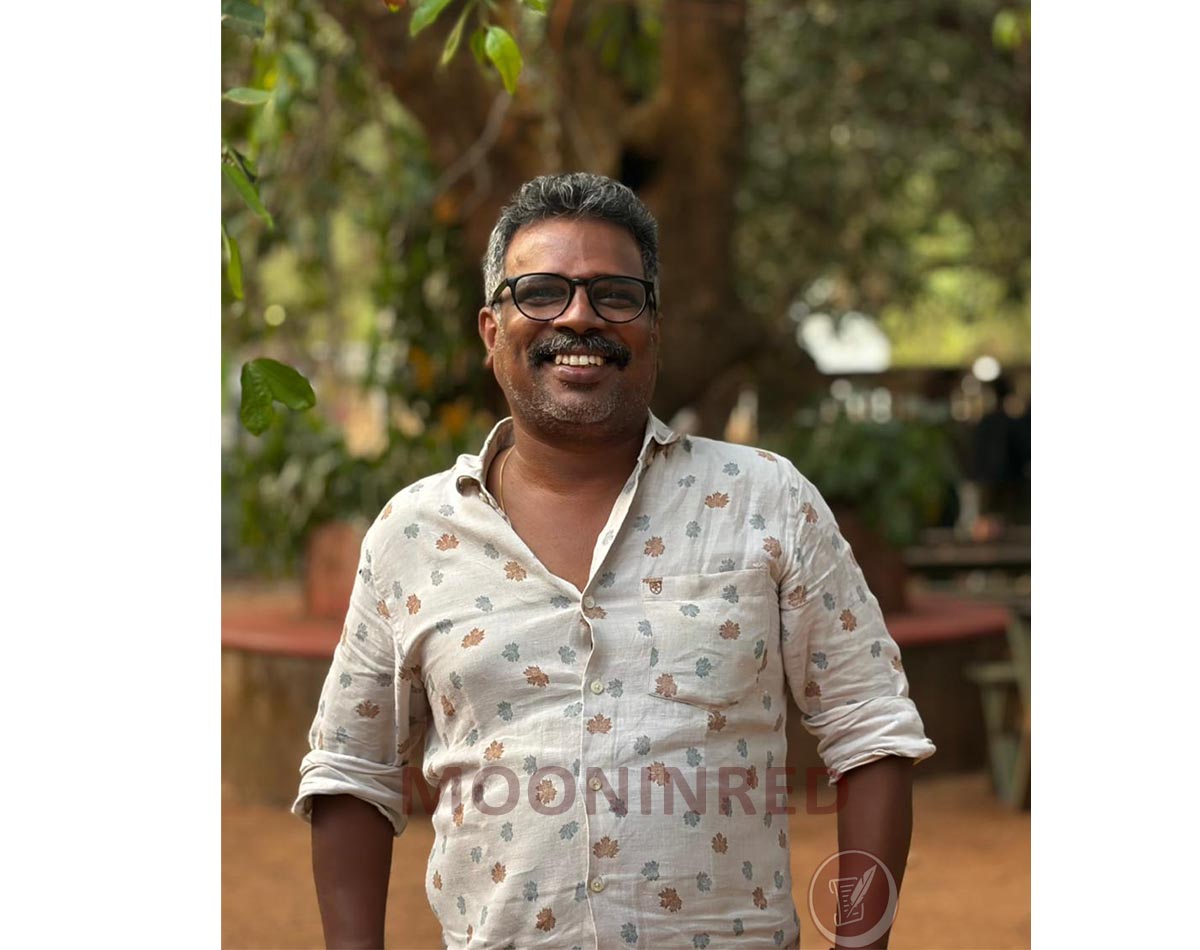
Jothish Shankar: The Art of Building Worlds before Telling Stories
Jothish Shankar was born and brought up in Alappuzha, a land shaped by water, boats, temples, narrow streets and layered histories. Growing up in such a visually rich environment, it almost feels destined that he would become someone who builds worlds for cinema. He was always inclined towards art, not just as a hobby but as a way of seeing life. That vision led him to study at the Ravi Varma Institute of Fine Arts, where he completed his Bachelor’s degree in Fine Arts. The discipline of classical art education shaped his understanding of colour, texture, space and silence all of which later became defining elements in his cinematic work.
Unlike many who directly chase direction, Jothish Shankar began his career grounded in craft. He entered the film industry as an assistant art director, learning the language of cinema from the inside. Being an assistant meant understanding how sets are built from scratch, how realism is created out of plywood and paint, and how every object in a frame carries meaning. It was during this period that he slowly developed his own design philosophy subtle, rooted, and emotionally charged.
His first major independent work as an art director came with Abu, Son of Adam in 2011. The film went on to win the National Award, marking a significant early milestone in his career. For a young art director, beginning with a National Award-winning film is not just success, it is validation. The film demanded authenticity, and Jothish delivered spaces that felt lived-in, real and deeply humane. It set the tone for the kind of projects he would continue to choose.
Over the years, his name became synonymous with detail-oriented art direction in Malayalam cinema. In Kumbalangi Nights, he recreated a coastal life that didn’t feel staged. The half-broken house by the water, the fish markets, the small rooms filled with clutter everything reflected emotional states as much as geography. The house itself became a character. That ability to make space part of storytelling earned him the Kerala State Film Award for Best Art Director.
Similarly, in Android Kunjappan Version 5.25, he balanced rural simplicity with technological intrusion. The home where a robot enters a traditional village setting needed to feel believable. The clash between old and new was subtly reflected in the production design mud walls and metallic surfaces sharing the same emotional frame. Again, his work was recognized with the Kerala State Film Award.
In Nna, Thaan Case Kodu, he once again demonstrated how setting enhances narrative politics and satire. From courtrooms to roadside eateries, every location carried layers of social realism. The film demanded wit, but the design demanded authenticity. Jothish delivered both. He also contributed to the haunting visual atmosphere of Bramayugam, where darkness, architecture and mood blended into an immersive cinematic experience.
Across these films, one thing is clear Jothish Shankar does not decorate a film; he designs emotion. He approaches art direction as an extension of character psychology. Every wall crack, every faded paint, every poster in the background is intentional. His process reflects patience. He is known to observe real locations for weeks, studying light shifts, textures and the lived behaviour of spaces before replicating or reconstructing them for the screen.
Beyond art direction, he expanded into production design as well, handling larger conceptual control over the visual identity of films. While art direction focuses more on executing specific visual plans, production design shapes the overall visual language. Jothish has comfortably moved between both, proving his deep understanding of cinematic grammar.
Eventually, the storyteller within him sought expression beyond design. That inner urge gave birth to Ponman, his debut directorial venture. The seed of Ponman came from a personal incident in his life something that stayed with him long enough to demand cinematic expression. The experience occurred in Kollam, and rather than fictionalizing it alone, he approached writer G. R. Indugopan to shape it into narrative form. They sat together, revisiting the memory, extracting its emotional layers. From that collaborative process emerged a character named Ajesh.
This character eventually found life in Indugopan’s literary work titled Nālañcu cer̲uppakkār. Even while the book took shape, there was already an understanding between them that it would one day become a film. And thus, Ponman happened organically not as a commercial plan but as a lived experience transformed into art.
The film received a warm reception. For Jothish Shankar, commercial success is secondary to artistic honesty. He has often remained clear that he is, above all, an art person. Cinema for him is not merely business; it is expression. Ponman reflects that sensibility grounded, emotional and reflective. It carries what could be called his “prescription”: a belief that cinema must feel truthful before it feels profitable.
What makes his journey remarkable is consistency. Many art directors adapt to trends; Jothish creates atmospheres that are uniquely his. Each film in his career looks different, yet carries a subtle signature realism with poetry. From intimate domestic spaces to larger conceptual sets, he maintains integrity.
Winning two Kerala State Film Awards is not just about recognition but about trust from the industry. Directors rely on him because he doesn’t impose style; he listens to scripts. His background in fine arts allows him to think visually beyond limitations, while his grounded upbringing in Alappuzha keeps him emotionally rooted.
Today, Jothish Shankar stands as one of Malayalam cinema’s most respected art directors and production designers, and now, a filmmaker carving his own narrative path. His evolution from assistant art director to National Award-associated artist to State Award-winning designer and finally to director shows a journey built on patience, craft and artistic conviction.
His work reminds us that cinema is not only about actors and dialogues. It is about the spaces where stories breathe. And Jothish Shankar builds those spaces with care.
Filmography as a Production Designer
Abu, Son of Adam (2011)
Kumbalangi Nights
Android Kunjappan Version 5.25
Nna, Thaan Case Kodu
Bramayugam
Ponman
Diés Iraé
Filmography as a Director
Ponman
